
Home Where trucks go
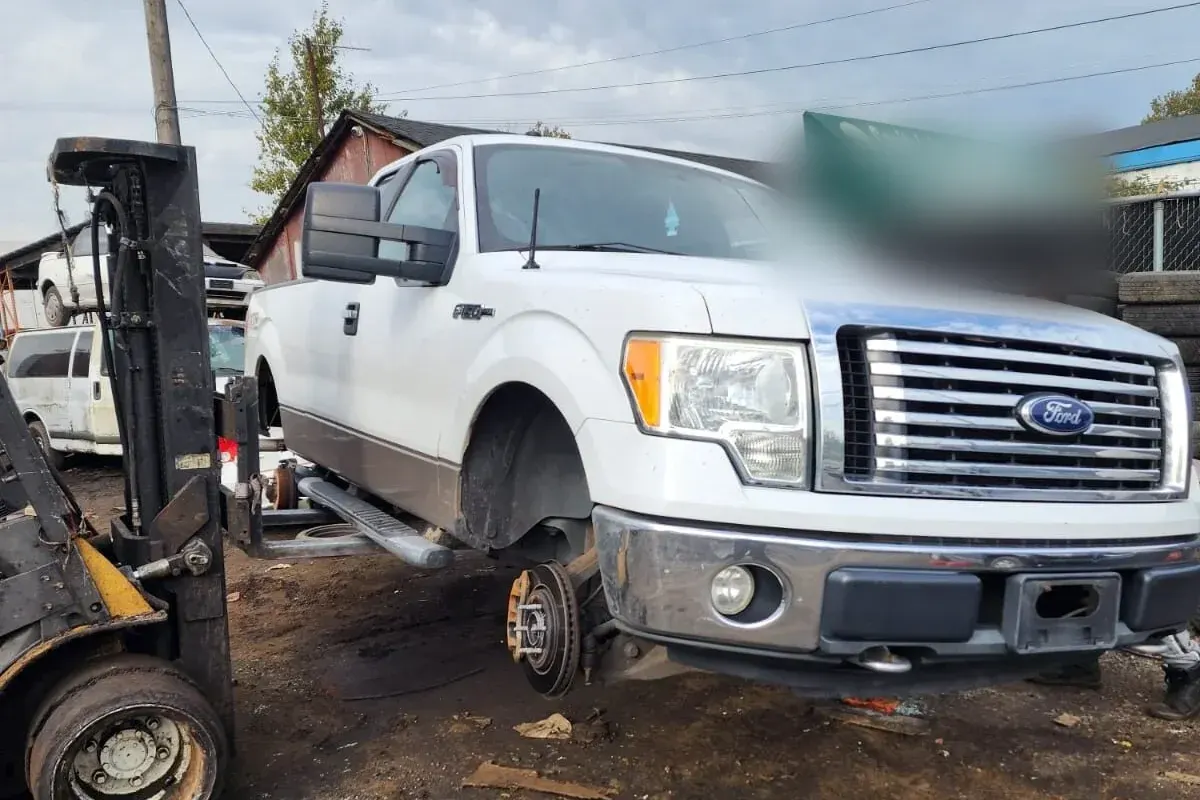
Where your junk truck goes after we tow it
A truck that's past fixing still holds a lot of steel, aluminum and copper. Here's what happens once it reaches the yard.
- Fluids drained first
- Refrigerant recovered
- Metal recycled
At the yard
Step by step
- 01
Fluids out
Fuel, oil, coolant and brake fluid are drained and kept separate.
- 02
Battery out
Lead-acid batteries go to a battery recycler.
- 03
A/C recovered
Refrigerant is captured with proper equipment, not vented.
- 04
Parts pulled
Usable engines, transmissions and panels may be saved.
- 05
Metal sorted
Steel, aluminum and copper are separated and recycled.

Whole trucks only
What we won't buy
- Loose catalytic converters. We only buy them attached to a truck.
- Loose parts, or engines on their own.
- Any truck without proof of ownership.
The yard side
What recycling a truck actually involves
A truck is mostly steel, with aluminum, copper, rubber, glass and fluids mixed in. Each goes somewhere different.
Fluids
Fuel, engine oil, transmission fluid, coolant, brake fluid and washer fluid are drained. Used oil and coolant are collected for recycling. Fuel is often reused. They're drained into proper containers before anything else happens. Leaks are plugged before loading where we can.
Refrigerant
Air conditioning and reefer units contain refrigerant. In BC it has to be recovered with proper equipment, not released. It's recovered by trained people with the right equipment, never vented.
Batteries
Lead-acid batteries are removed and sent to battery recyclers. Lead is one of the most recycled materials there is. They go to a battery recycler, separately from the metal.
Tires
Tires come off and go to tire recycling, where they're processed into other rubber products. Tires go to a tire recycler, and good ones may be resold.
Parts
Engines, transmissions, axles, body panels and other usable parts may be pulled and sold for reuse. That keeps them out of the shredder and helps keep other trucks on the road. Doors, glass, axles, mirrors and seats from popular trucks often find a second life on another truck.
Metal
What's left is shredded and sorted into steel, aluminum and copper, which go back to mills and smelters. Prices for these metals move with the market, which is why truck quotes change over time. Steel, aluminum and copper are separated, so each can be melted down and reused.
Engines and transmissions
Truck engines and transmissions that still work are often pulled and resold before anything is crushed. That's part of why a junk truck is worth more than its weight in steel. Heavy truck parts have a strong used market, which keeps good engines and transmissions in service.
Catalytic converters and DPFs
Catalytic converters and diesel particulate filters contain precious metals and are recycled separately. If yours has been stolen or removed, tell us; the truck is still bought. Theft of converters is common, and a truck with one missing is priced on the rest.
Nothing is dumped
Every part of a junk truck goes somewhere: parts to reuse, fluids to proper recycling, metals to be melted down and reused. What's left after that goes for proper disposal. That's why recycling a truck takes more care than crushing it, and why it pays to use a yard that does it properly.
Questions
Questions people ask us
Do I need to drain the fluids first?
No. Leave everything in it. Draining happens at the yard.
What happens to my plates?
You keep them. Plates never leave with the truck.
Is my truck crushed right away?
Not always. Useful parts may be pulled first, then the rest is recycled.
Do you crush trucks right away?
No. Fluids, refrigerant, batteries and tires come out first, and usable parts are pulled before the rest is recycled.
Is my truck resold?
Sometimes. A truck that can be fixed may go to someone who will repair it. The rest are taken apart.
Do you take trucks with no catalytic converter?
Yes. Tell us if it's missing.
Where is my truck recycled?
Trucks go to licensed recyclers in the region, where fluids, refrigerant, batteries and tires are handled first.
Does recycling a truck help the environment?
Yes. Recovering fluids and refrigerant keeps them out of the ground and the air, and recycled steel takes far less energy to make than new steel.
Truck past fixing?
Send the year, make and condition. We'll call back with a quote.